10 Million Logins From One Online Store — And Two Fields It Probably Didn't Need
A music retailer lost 10,214,652 login records in one afternoon, then warned members about phishing emails without telling them to change the password they had just lost. Three breaches in three weeks
Read More →
178 Websites, One Marketing Script: The Optimizely Attack and Your Checkout
A marketing script became the delivery van for a card skimmer, a crypto swapper and two iOS exploit kits across 178 organizations in one day. Your shop probably does not run Optimizely — but it hands
Read More →
The Lock Was the Key: OpenSSH's sshole Bug (CVE-2026-123158)
On OpenSSH running over musl, a locked account became a way in. The hardening step that protects a server was the exact string that let attackers through — and the first working login showed up nine h
Read More →
WordPress 7.1.4 Fixed a Flaw That Only Exists During the Update. Here Is Why You Still Have to Check.
Attackers spent 14 hours polling sites to catch a flaw that only exists for a few seconds while WordPress installs an update. Patched in 7.1.4 and now in CISA's exploited list — and if you trust autom
Read More →
AI Helped Find the Worst Bugs in October's Vulnerability Storm. Here Is What That Changes for You
Three maximum-severity 10.0 flaws, a record 1,413-CVE Patch Tuesday, and the PHP runtime under 70 percent of the web — all inside four weeks. The thread running through October is who found the bugs,
Read More →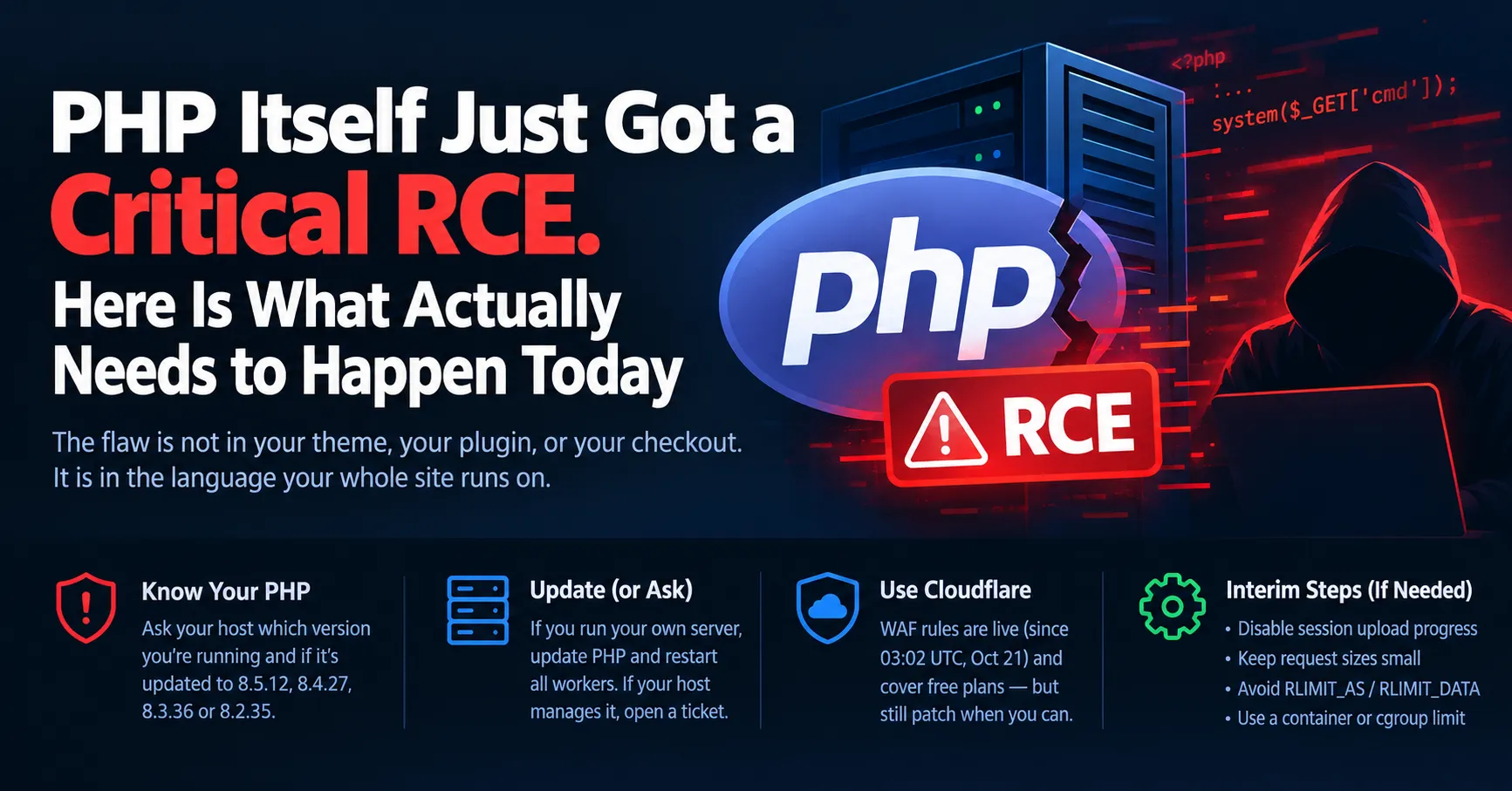
PHP Itself Just Got a Critical RCE. Here Is What Actually Needs to Happen Today
Two critical flaws in PHP itself — not a plugin — let an attacker run code on unpatched servers, and exploitation has already begun. Fixed in 8.5.12, 8.4.27, 8.3.36 and 8.2.35. What to do today.
Read More →
Your Scanner Says B. Here Is What to Fix First.
Got a B on your security scan? Good news: it means no emergency. Here is which findings to fix first, which can wait, and how to get back to an A without breaking checkout.
Read More →
AI Agents Are Breaking Into Websites: 7 Cases From 2026
Seven documented 2026 cases show AI agents doing the breaking-in themselves — in tests that escaped control and in real attacks. Here is what changed for small website owners, and the five habits that
Read More →
The Morning-After Habit: Two Disciplines That Close the Exploit Window
Attackers now exploit critical flaws within hours of the patch — while 86% of WordPress sites run old code. Two habits close that gap: verify every update the morning after, and scan on a schedule plu
Read More →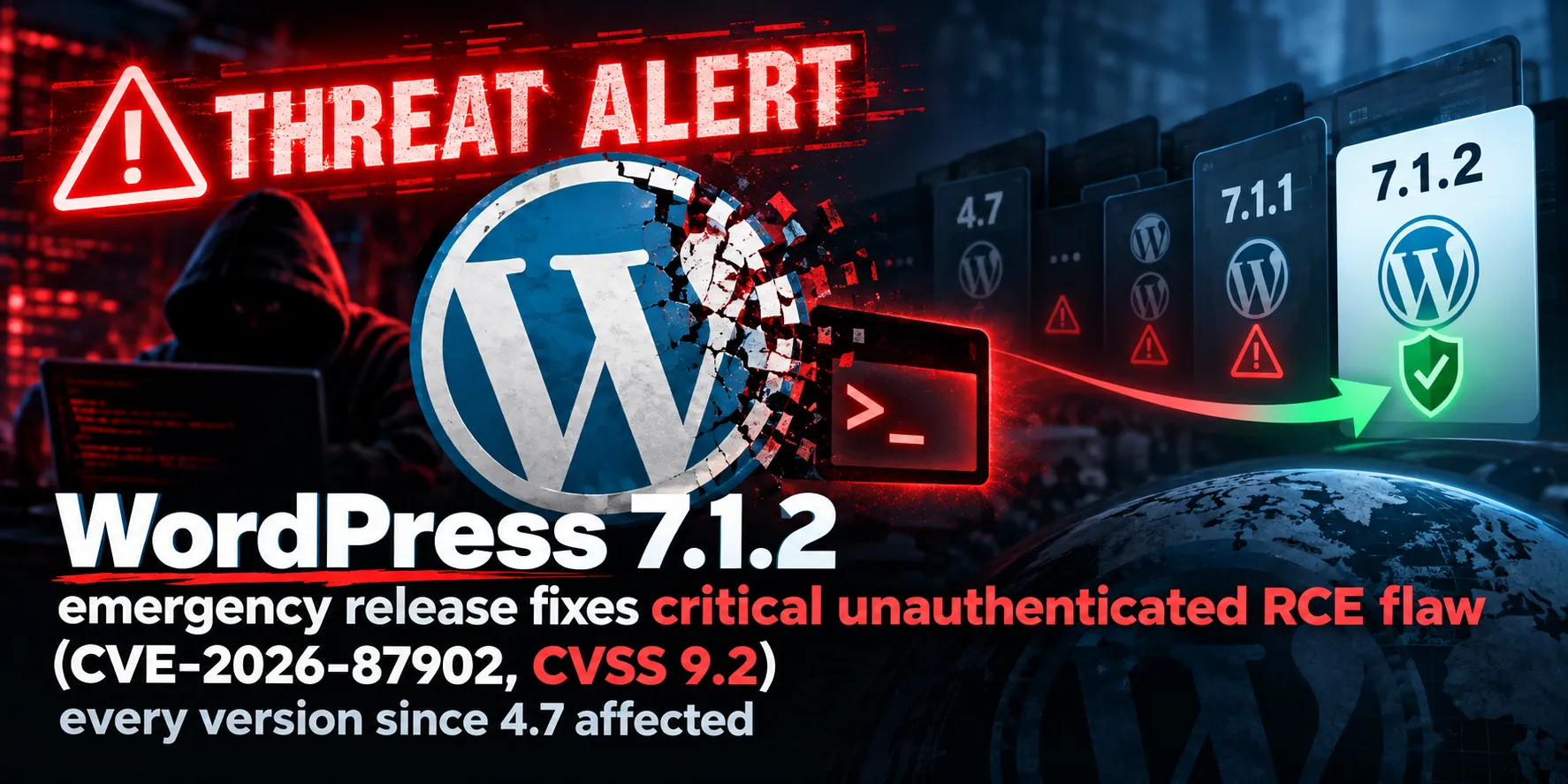
Updated WordPress Last Week? Do It Again: 7.1.2 Fixes an Unauthenticated RCE
WordPress 7.1.2 fixes an unauthenticated flaw (CVE-2026-87902, CVSS 9.2) that can escalate a page request to server code execution on some setups. Updated to 7.1.1 last week? You need this one too.
Read More →
When the "Government" Emails You for Customer Data — Verify First
Revolut handed passports, selfies, and transaction histories to criminals using a real government email address. Its own systems were never breached — just a trusted inbox. Here is the verification ha
Read More →
One Link to Takeover: WordPress 7.1.1 Fixes the Click2Shell Chain
WordPress 7.1.1 fixes Click2Shell — one crafted link opened by a logged-in admin can force-install a theme and chain to server takeover. Update to 7.1.1, verify auto-updates, and tighten comment moder
Read More →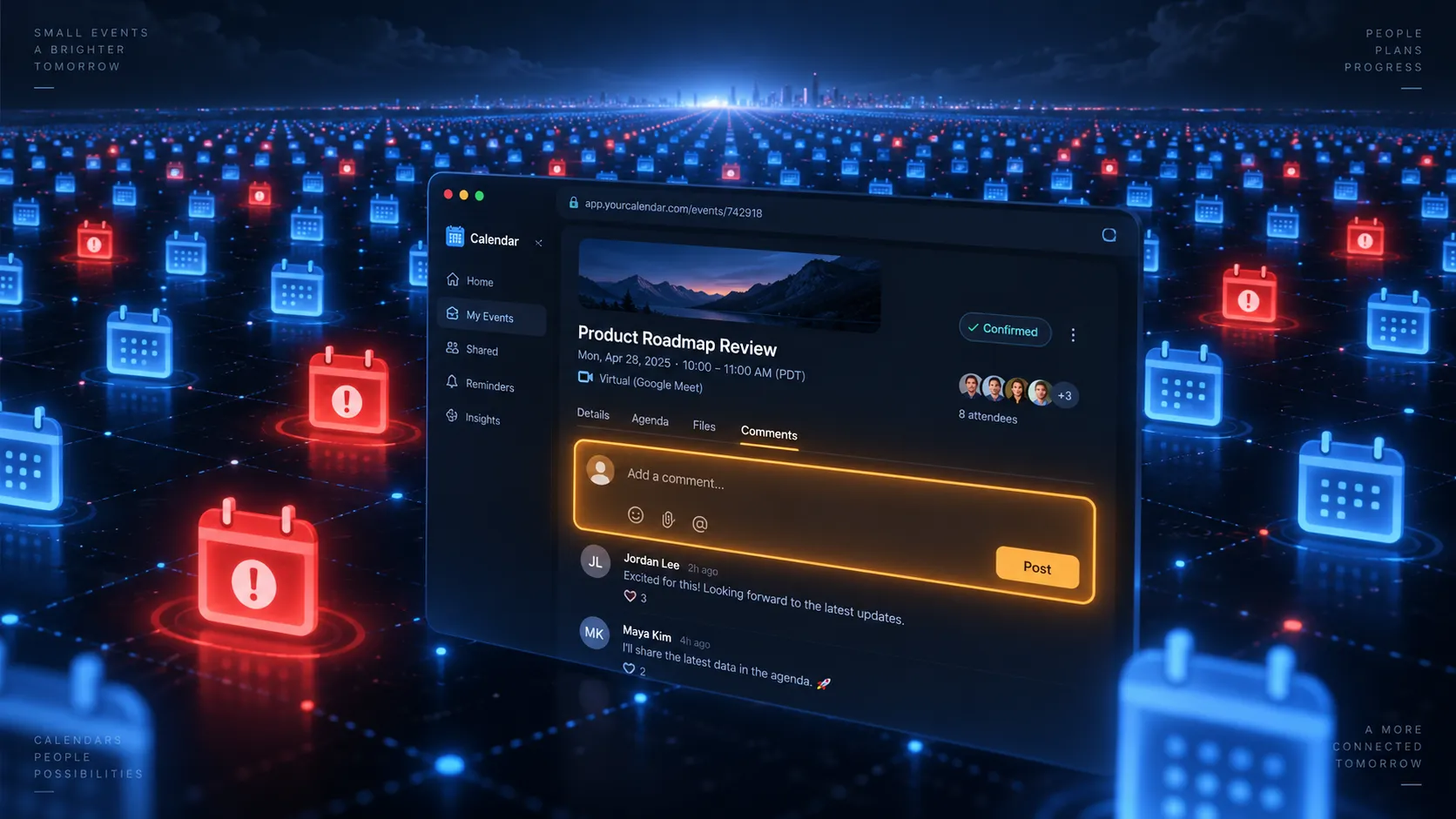
Your Events Page Could Hand Over Your Whole Site: The Events Calendar RCE Pair
The Events Calendar has two unauthenticated RCE flaws (CVSS 9.8, 600k+ installs) — but only sites with event comments visible are reachable. Update to 6.17.4.1 and check one setting.
Read More →
Your Donation Page Could Hand Over Your Server: GiveWP CVE-2026-82222
GiveWP's unauthenticated code-execution flaw (CVE-2026-82222, CVSS 10.0) endangers donation pages — 100k-install plugin, versions through 4.16.7.1 affected, fixed in 4.16.7.2.
Read More →
Your Contact Form Could Be a Backdoor: Elementor Pro CVE-2026-32475
Elementor Pro's file upload flaw lets unauthenticated visitors upload executable files on sites with public upload forms — installed on 6M+ sites, 190,000+ attacks already blocked. Update to 4.2.2 and
Read More →
1,033 Stripe Secret Keys Leaked: Why Your .env File Is Now Part of Your Payment Security
On Aug 18, 2026, 1,033 live Stripe secret keys from 669 vendors were dumped online — with claims of 20,000 more. The leak wasn't a Stripe bug. It was exposed .env files and secret keys left where auto
Read More →
GitLab Patched a Critical Flaw. Attackers Were Probing It Within Days.
GitLab shipped an emergency patch for a CVSS 9.4 GraphQL flaw — and attackers were probing it within days. If you self-host GitLab, the patch window just got a lot shorter.
Read More →
A Perfect-10 Flaw in Microsoft's Login System — and Why You Didn't Have to Do Anything
A perfect-10 RCE in the login system behind Microsoft 365 was disclosed — and fixed in the cloud, no action required. Knowing which parts of your stack work that way (and which don't) is the real less
Read More →
Two Security Releases in 24 Hours: What the Magento and WordPress Updates Mean for Your Store
Magento and WordPress both shipped urgent security patches within 24 hours of each other — one needs no login at all. Here's what to patch first and why.
Read More →
The Metabase Zero-Day: What a CVSS 10.0 Breach Teaches Website Owners About Forgotten Tools
A perfect-10 zero-day hit Metabase's own cloud first, stealing customer data at Framework and Tally — and the same flaw threatens every self-hosted install. The lesson: if you run it yourself, you're
Read More →
CVE-2026-8457: Why a 'Sign in with Apple' Button Could Let Attackers Into Your WooCommerce Admin
A critical 9.8-rated auth bypass in the WooCommerce – Social Login plugin lets attackers log in as your store admin using nothing but a forged "Sign in with Apple" token and a known email address. Her
Read More →
AI Is Finding Bugs Faster Than You're Patching Them — What Website Owners Should Do Differently
AI now finds hundreds of zero-days in days, not months — and WordPress sites are already being hacked within hours of patches shipping. Here's what small business owners need to change about patching
Read More →
88% of Small Business Breaches Include Ransomware — Here's What That Actually Means for You
88% of small business breaches now involve ransomware — 2.3x the rate at large enterprises. Here's why SMBs are the top target, what a modern ransomware attack actually looks like, and three fixes tha
Read More →
WordPress Just Patched a Critical RCE Chain — Update to 7.0.2 Now
A critical, unauthenticated RCE chain in WordPress core is now under active attack, with exploit code publicly available. If you're on WordPress 6.8 through 7.0.1, here's what to patch, how to check f
Read More →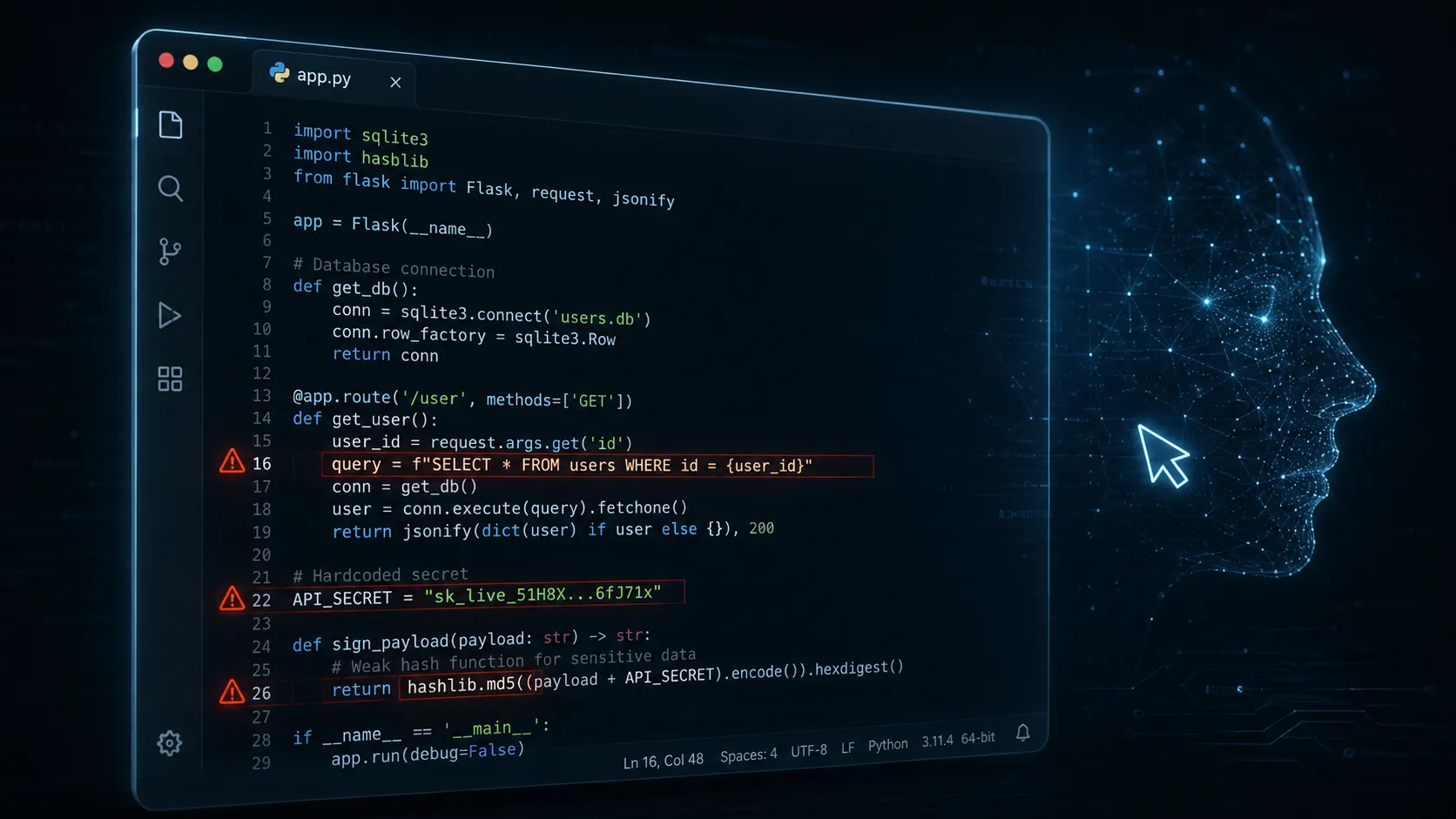
AI Wrote Your Code. Did It Ship a Vulnerability Too?
45% of AI-generated code contains security flaws. Here's what developers and small teams should check before trusting code that came from a prompt.
Read More →
How AI Rewrote the Attacker's Playbook in 2026
AI-powered attack tools cut exploit development from weeks to hours. Here's what changed, what it means for your website, and how to defend against it.
Read More →
Someone Else Might Already Be Logged Into Your Shop
Account takeover attacks hit 21% of consumers in 2025. Here's how to check whether your shop's login is already compromised — and what to do about it.
Read More →
Your Website's Biggest Security Risk May Be Something You Accidentally Left Public
Recent cybersecurity stories show the same pattern: attackers often start with what is exposed. Here is what website owners can check before a visible issue becomes an incident.
Read More →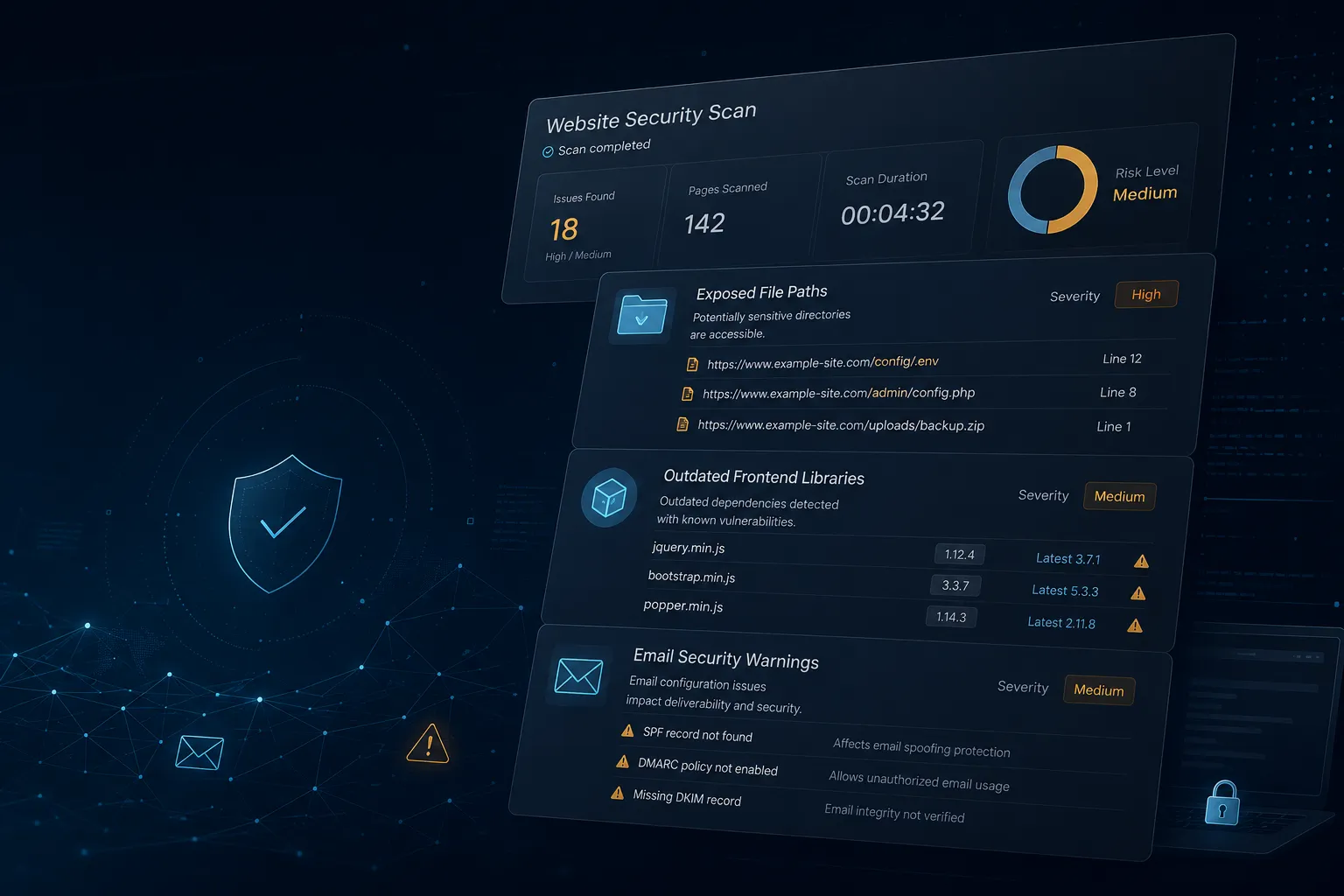
What 10 Public Website Scans Revealed About Real-World Security Gaps
A small sample of 10 public website scans revealed practical security gaps beyond missing headers, including high-risk path exposure, outdated frontend dependency signals, and weak email trust control
Read More →
Your Checkout Looks Fine Today. It Won't Warn You When That Changes.
A live Stripe skimming campaign has quietly compromised 49+ stores since 2024. Here's what CSP, SRI, and script monitoring would have stopped — and how to start.
Read More →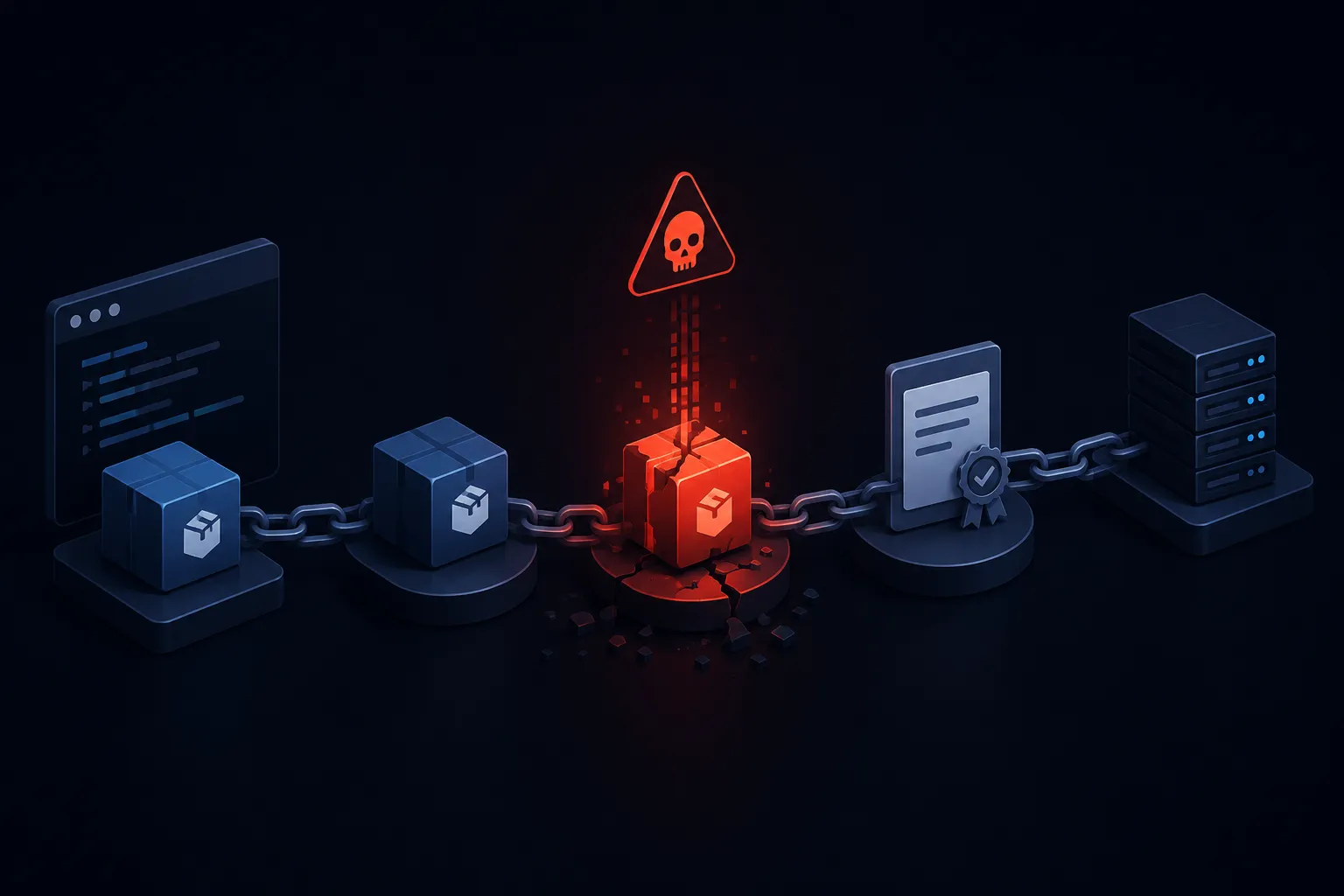
Supply Chain Is the New Front Door: What May 2026 Taught Us About Third-Party Risk
May 2026 saw trojanized installers hitting 100+ countries, a certificate authority issuing fraudulent code-signing certs, and a compromised open-source library reaching inside OpenAI. These weren't ze
Read More →
Two Retailers, One Attack: What Really Decides Who Survives a Breach
How M&S lost £300M and Co-op contained the damage — and what it tells us about the security decisions that actually matter.
Read More →
Cloudflare Is Not Enough: Two Security Gaps We Still Find Behind the WAF
Almost every ecommerce and web app client we assess uses Cloudflare. Many assume that means they're protected. But in real-world blackbox testing, the serious findings often sit behind the WAF: expose
Read More →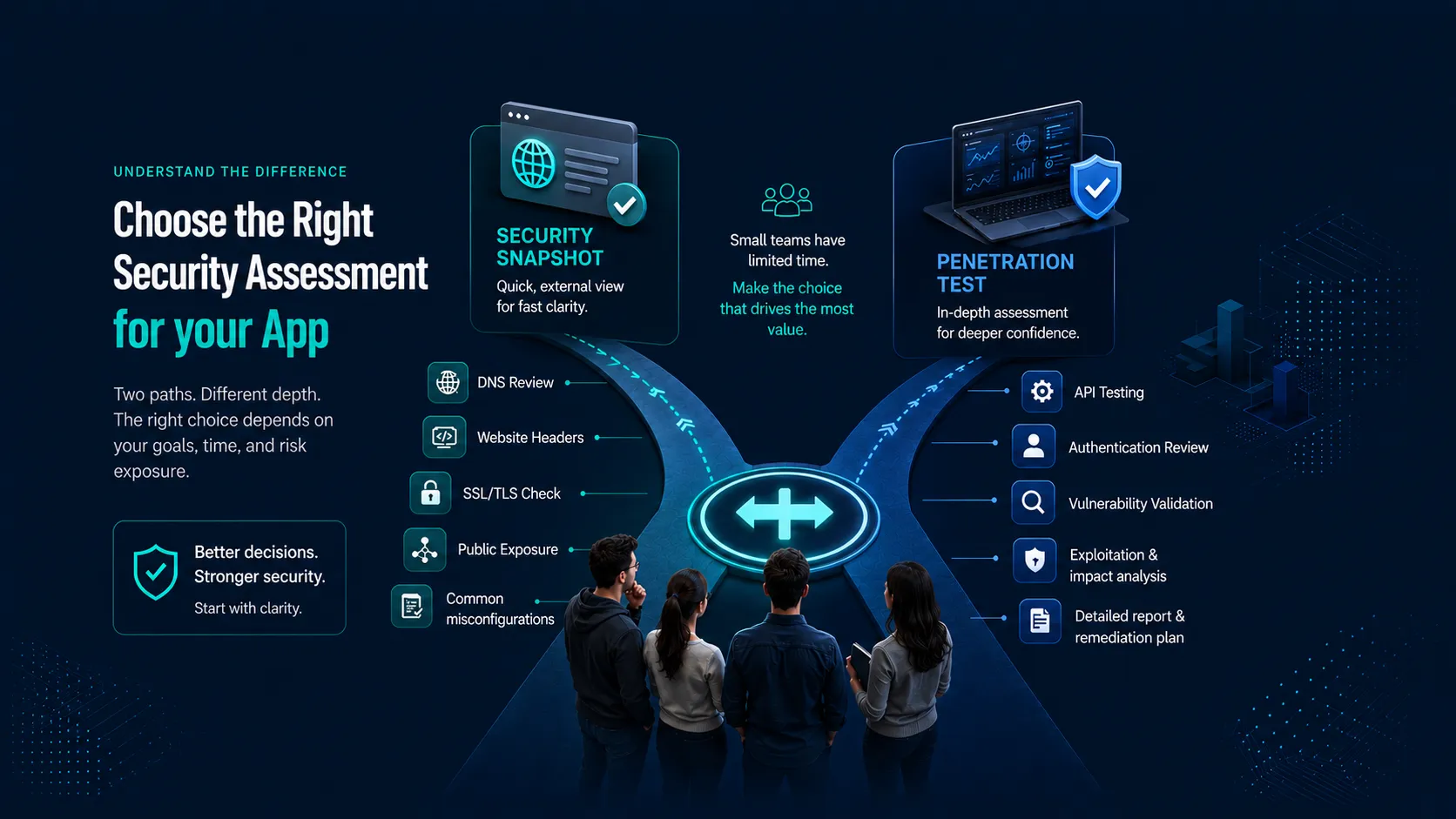
Free Security Snapshot vs Penetration Test: What Small Teams Should Know
Learn how a free external security snapshot differs from an automated scan and a scoped penetration test, and when small teams should move to deeper assessment.
Read More →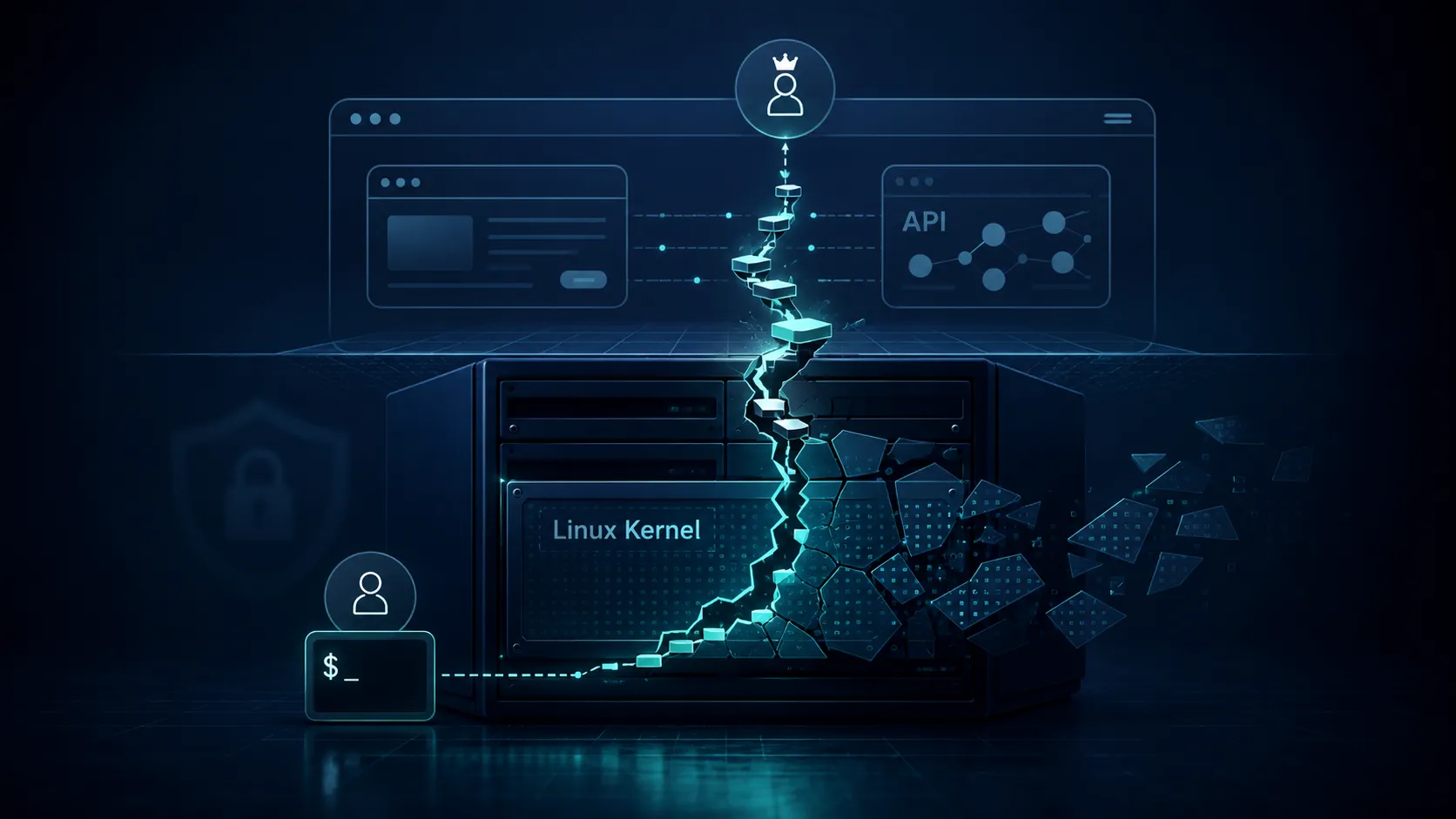
Dirty Frag: Why "Local" Linux Kernel Bugs Still Matter to Web Apps
Dirty Frag is a Linux local privilege escalation issue, not a remote web exploit. But for web apps, containers, CI runners, and ecommerce platforms, local root escalation can turn a limited compromise
Read More →
API Security Testing Checklist for Software Teams
Use this practical API security testing checklist to review authentication, authorization, input validation, business logic, logging, and common release risks before attackers do.
Read More →
How Much Does Web Application Penetration Testing Cost for Small Businesses in 2026?
Got a quote for a pentest and not sure if it's fair? This guide breaks down what small-business web application penetration testing actually costs in 2026, what moves the price up or down, and how to
Read More →
CVE-2026-3854: What GitHub’s Git Push RCE Teaches Us About Internal Trust Boundaries
A practical security design lesson from GitHub’s git push pipeline vulnerability: authenticated workflows and internal headers do not automatically make user-controlled data safe.
Read More →
How an Ecommerce Store Could Lose $60,000 to a Single XSS Flaw
See how one browser-side XSS flaw can turn into checkout disruption, customer trust damage, incident response cost, and ecommerce revenue loss.
Read More →
Your Clean Scan Report Might Be Your Biggest Security Risk
A clean vulnerability scan does not prove your product is secure. Learn why scanners miss business logic flaws, API authorization issues, and real attack paths.
Read More →
OWASP Top 10 in 2026: A Practical Prioritization Guide for Small Teams
Small teams should not fix security issues by checklist order alone. Learn how to prioritize OWASP risks by exposure, exploitability, and business impact.
Read More →
Why WordPress Sites Still Get Compromised in 2026: The Plugin Problem Behind the Headlines
Modern WordPress sites are application stacks, not simple websites. See how plugin sprawl, admin risk, and unmanaged exposure still lead to compromise.
Read More →
AWS Misconfiguration Is Still the Fastest Way to Turn a Small Mistake Into a Big Incident
AWS incidents often begin with small misconfigurations. Learn how exposed services, weak IAM, metadata access, and storage mistakes can chain into compromise.
Read More →